Pradėti galima nemokamai, paskyros nereikia.
MAŽOJI ARKANA · KALAVIJAI / IŠSAMIAU
Kardų ketvertas
Rest that is chosen on purpose: withdrawing to recover before you re-enter the fray.
Taro siūlo požiūrį, o ne nekintamą prognozę. Pagalvokite, kur šis vaizdas susitinka su jūsų pačių patirtimi.
Tiesios kortos reikšmė
Step back and recover. This is a pause for healing and quiet thought, not a defeat.
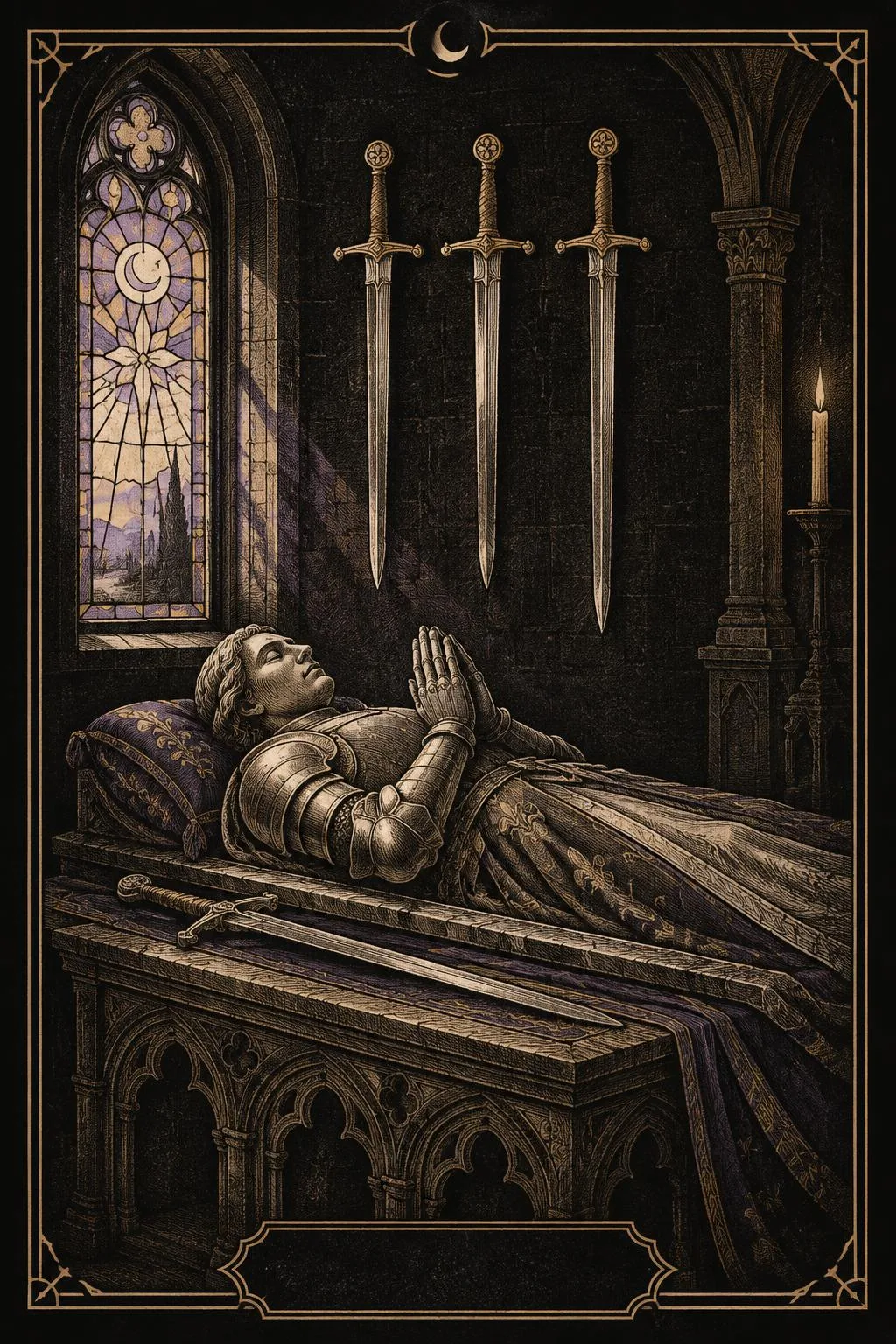
A knight lies on a tomb in a chapel, hands folded in prayer, with one sword beneath him and three mounted on the wall above. The scene is still and deliberate, a rest taken after struggle rather than instead of it. In a reading it asks for recovery: sleep, silence, a retreat from arguments and demands. The swords are not gone; they are set aside for now. Rest here is a form of strategy, letting the mind settle so that it can see clearly again.
Apverstos kortos reikšmė
You cannot or will not stop. Either the rest is over and you are stirring, or exhaustion is being ignored until it forces the issue.
Reversed, the knight is rising from the tomb, which can mean two very different things. Sometimes the recovery is complete and you are ready to return to activity with a clearer head. More often it suggests rest refused: a mind that keeps churning, a body that is tired of being pushed, or a pause that is being taken only because something finally gave out. The card asks you to tell the difference between being ready and merely being restless.
Raktažodžiai
Tiesios kortos reikšmė: rest, recovery, retreat, stillness, contemplation
Apverstos kortos reikšmė: restlessness, burnout, forced pause, re-emerging, refusing to rest
Klausimas apmąstymams
What would real rest look like for you right now, and what keeps you from taking it?
Meilėje
A relationship may need quiet rather than discussion right now. Give each other room to recover and the conversation will go better later.
Apversta: One of you is worn thin, or a needed break keeps getting postponed. Rest before the next talk, not after.
Meilės išdėstymai ir santykių išdėstymo schemosKarjeroje
Pull back from a demanding period and let your thinking settle. Time away from the problem is often what solves it.
Apversta: Burnout is close, or you are returning to work before you have really recovered. Pace yourself more honestly.
Finansų srityje
A quiet period for your finances. Hold steady, avoid big moves, and let things consolidate.
Apversta: Anxiety about money is costing you rest, or you are hurrying to act after a pause. Check whether the urgency is real.
Aiškinimas „taip / ne“
Not now: the card advises waiting and recovering first, and reversed it suggests the pause is nearly over but not quite.
Kaip veikia „taip ar ne“ išdėstymaiŠI KORTA IŠDĖSTYME
Kortos reikšmė keičiasi pagal poziciją, kurioje ji atsiduria, ir pagal jūsų klausimą. Šiuose straipsniuose paaiškinta, kaip veikia kiekviena schema; jūsų išdėstymo kortos ištraukiamos atsitiktinai.
- Taip / Ne išdėstymai
Tiesi korta Kardų ketvertas linksta į atsakymą „galbūt“, apversta – „galbūt“. „Taip / Ne“ išdėstymas dar parodo, kas palaiko atsakymą, kas jį apsunkina ir kas priklauso nuo jūsų.
- Meilė ir santykiai
Penkios pozicijos: Jūs, Kitas žmogus, Ryšys, Iššūkis, Galimybės. Nuo to, kurioje pozicijoje atsiduria korta Kardų ketvertas, priklauso, ką ji pasakys apie jūsų ryšį.
- Praeitis / Dabartis / Ateitis
Trys pozicijos: Praeitis, Dabartis, Ateitis. Praeities pozicijoje korta Kardų ketvertas apibūdina tai, kas suformavo situaciją, ateities pozicijoje – kur situacija gali krypti.
NUO REIKŠMĖS PRIE PRAKTIKOS
- Dienos korta
Viena korta per dieną ir klausimas apmąstymui: neskubus būdas pažinti kaladę, taip pat ir šią kortą.
- Pasirinkite vedlį
Vedlys keičia tai, kaip parašytas aiškinimas, bet ne tai, kokios kortos iškrenta. Kiekvienas jų yra savito stiliaus DI balsas.
SUSIJUSIOS KORTOS
SĄSAJOS
- Numerologija: gyvenimo kelio skaičius 4
Korta neša skaičių 4. Numerologijoje tas pats skaičius įvardija gyvenimo kelią; skaitykite jį ten pagal jo paties taisykles – kaip kortos palydovą, o ne jos dalį.