Pradėti galima nemokamai, paskyros nereikia.
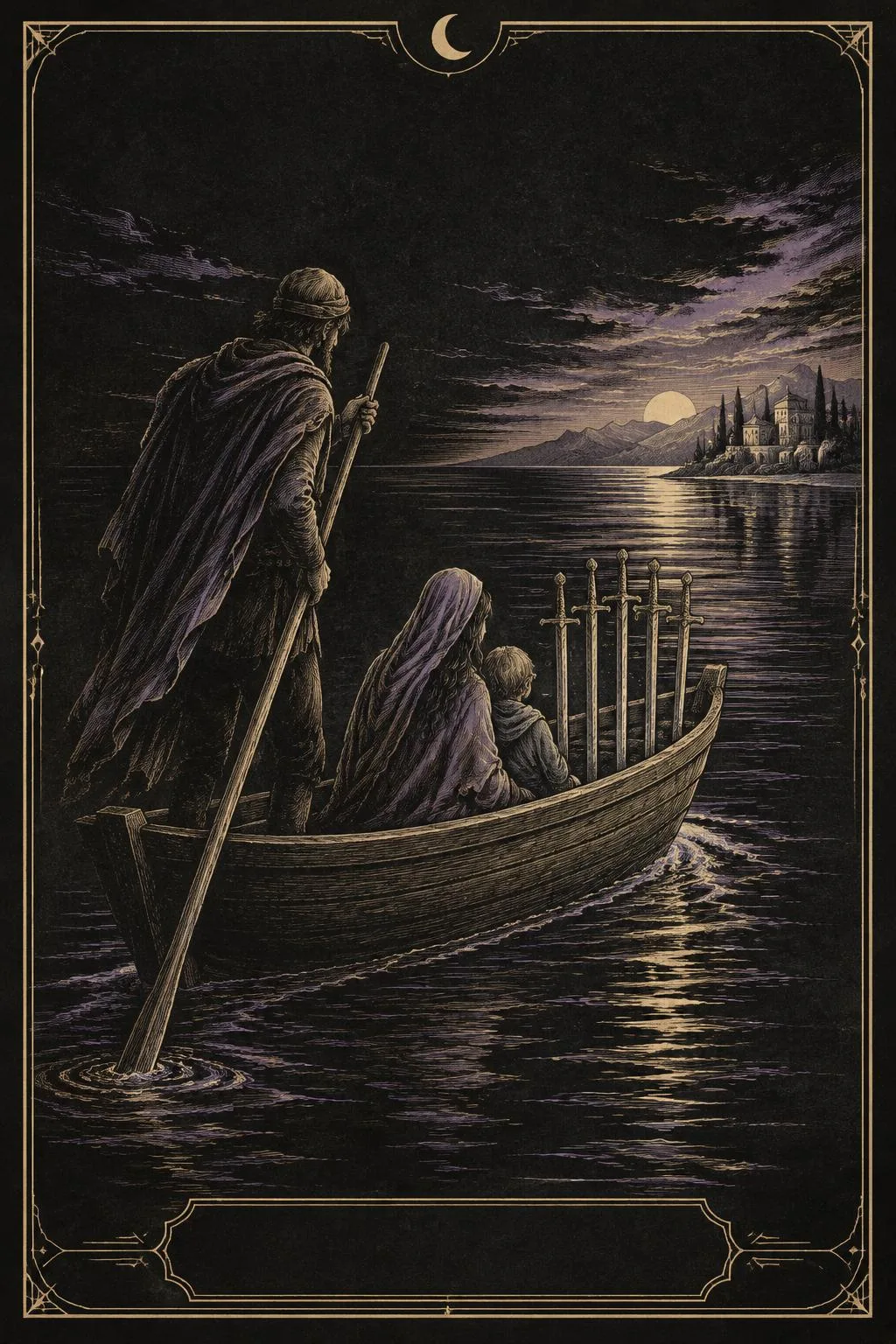
MAŽOJI ARKANA · KALAVIJAI / IŠSAMIAU
Kardų šešetas
A quiet passage away from trouble: not a triumph, but the relief of moving toward calmer water.
Taro siūlo požiūrį, o ne nekintamą prognozę. Pagalvokite, kur šis vaizdas susitinka su jūsų pačių patirtimi.
Tiesios kortos reikšmė
You are leaving something behind and heading somewhere calmer. The journey is subdued, but the direction is right.
A ferryman poles a small boat across dark water, carrying a hooded woman and a child, with six swords standing upright in the bow. The passengers face away from us, towards a far shore where a town catches the light. In the Rider–Waite–Smith tradition the water is rough on one side of the boat and smooth on the other, which is why the card is read as a passage out of difficulty. In a reading it can mark a move, a decision to stop fighting, or the slow return of peace after a hard chapter. It rarely feels like victory. It feels like getting through, and that can be enough. The swords travel with you: what hurt is not gone, but it is no longer steering. Someone else holds the pole here, so the card also asks who is helping you cross, and whether you are letting them.
Apverstos kortos reikšmė
The crossing stalls. You may be clinging to what you meant to leave, or carrying too much of it with you to really arrive anywhere new.
Reversed, the boat sits in rough water or turns back toward the shore it left. This often shows a transition that is not working: a change you resist, a relocation that unsettles rather than soothes, or the sense that you have moved on in every practical way while your thoughts have stayed behind. It can point to baggage that needs unpacking before you can settle, or to a situation you keep returning to because its difficulty is at least familiar. The reversal does not have to mean failure. Some crossings need more preparation, some are held up by circumstances rather than by a lack of will, and sometimes staying to finish something is the honest choice. The card asks what still ties you to the old situation, and whether that tie is truly yours to keep.
Raktažodžiai
Tiesios kortos reikšmė: transition, moving on, recovery, leaving behind, gradual calm
Apverstos kortos reikšmė: stuck in place, resisting change, unfinished business, rough crossing, returning to trouble
Klausimas apmąstymams
What are you ready to leave on the far shore, and what do you need to bring with you?
Meilėje
A relationship moves past a rough patch, or you begin to move on from one that could not be mended. The card is quiet rather than romantic: less a grand reconciliation than a choice of calmer water. It may describe space after a difficult conversation, the slow rebuilding of trust, or the first days after a breakup, when relief and grief arrive together.
Apversta: Old patterns keep resurfacing, or a breakup you thought was settled is not. You may be carrying the last relationship into the next one, or going back because leaving felt too hard. Read it as a question about your own readiness, not as news about another person. If leaving a relationship feels unsafe, that calls for support from people you trust or a specialist service, not a reading.
Meilės išdėstymai ir santykių išdėstymo schemosKarjeroje
A measured change of role, team or direction eases pressure. Progress here is quiet rather than dramatic: handing over a project that has worn you down, leaving a difficult workplace, or relocating for work. The card favours planning the transition, and bringing what you have learned without bringing the old conflict with you. A colleague or mentor may be part of how you get across.
Apversta: You may be staying in a situation you have outgrown, or a planned change keeps hitting delays. Sometimes the new job looks suspiciously like the old one because the same habits came along. Look at what is really holding the boat: a practical obstacle you can solve, a fear you have not named, or loyalty to something that no longer needs you.
Finansų srityje
Financial strain may be easing gradually, through steady, practical steps rather than a windfall. A simpler budget, a cheaper place to live or closing an old obligation can all belong here.
Apversta: An attempt to escape money trouble is not landing, often because the underlying habit has travelled with you. Look at what repeats before changing anything bigger, and consider independent advice if debt is involved.
Aiškinimas „taip / ne“
Upright, the Six of Swords leans towards a gentle yes: a move away from difficulty looks worth making, even if it is slow and unglamorous. It suits questions about leaving, moving on or changing direction. Reversed, the answer is less certain: the change is delayed or incomplete, so check what still holds you back before you decide.
Kaip veikia „taip ar ne“ išdėstymaiŠI KORTA IŠDĖSTYME
Kortos reikšmė keičiasi pagal poziciją, kurioje ji atsiduria, ir pagal jūsų klausimą. Šiuose straipsniuose paaiškinta, kaip veikia kiekviena schema; jūsų išdėstymo kortos ištraukiamos atsitiktinai.
- Taip / Ne išdėstymai
Tiesi korta Kardų šešetas linksta į atsakymą „taip“, apversta – „galbūt“. „Taip / Ne“ išdėstymas dar parodo, kas palaiko atsakymą, kas jį apsunkina ir kas priklauso nuo jūsų.
- Meilė ir santykiai
Penkios pozicijos: Jūs, Kitas žmogus, Ryšys, Iššūkis, Galimybės. Nuo to, kurioje pozicijoje atsiduria korta Kardų šešetas, priklauso, ką ji pasakys apie jūsų ryšį.
- Praeitis / Dabartis / Ateitis
Trys pozicijos: Praeitis, Dabartis, Ateitis. Praeities pozicijoje korta Kardų šešetas apibūdina tai, kas suformavo situaciją, ateities pozicijoje – kur situacija gali krypti.
NUO REIKŠMĖS PRIE PRAKTIKOS
- Dienos korta
Viena korta per dieną ir klausimas apmąstymui: neskubus būdas pažinti kaladę, taip pat ir šią kortą.
- Pasirinkite vedlį
Vedlys keičia tai, kaip parašytas aiškinimas, bet ne tai, kokios kortos iškrenta. Kiekvienas jų yra savito stiliaus DI balsas.
PANAŠIŲ TEMŲ KORTOS
SĄSAJOS
- Numerologija: gyvenimo kelio skaičius 6
Korta neša skaičių 6. Numerologijoje tas pats skaičius įvardija gyvenimo kelią; skaitykite jį ten pagal jo paties taisykles – kaip kortos palydovą, o ne jos dalį.