Pradėti galima nemokamai, paskyros nereikia.
MAŽOJI ARKANA · KALAVIJAI / IŠSAMIAU
Kardų dvejetas
A stalemate held by choice: two options balanced so carefully that no decision gets made.
Taro siūlo požiūrį, o ne nekintamą prognozę. Pagalvokite, kur šis vaizdas susitinka su jūsų pačių patirtimi.
Tiesios kortos reikšmė
You are holding two things in balance and looking at neither. The calm is real, but it comes from not choosing.
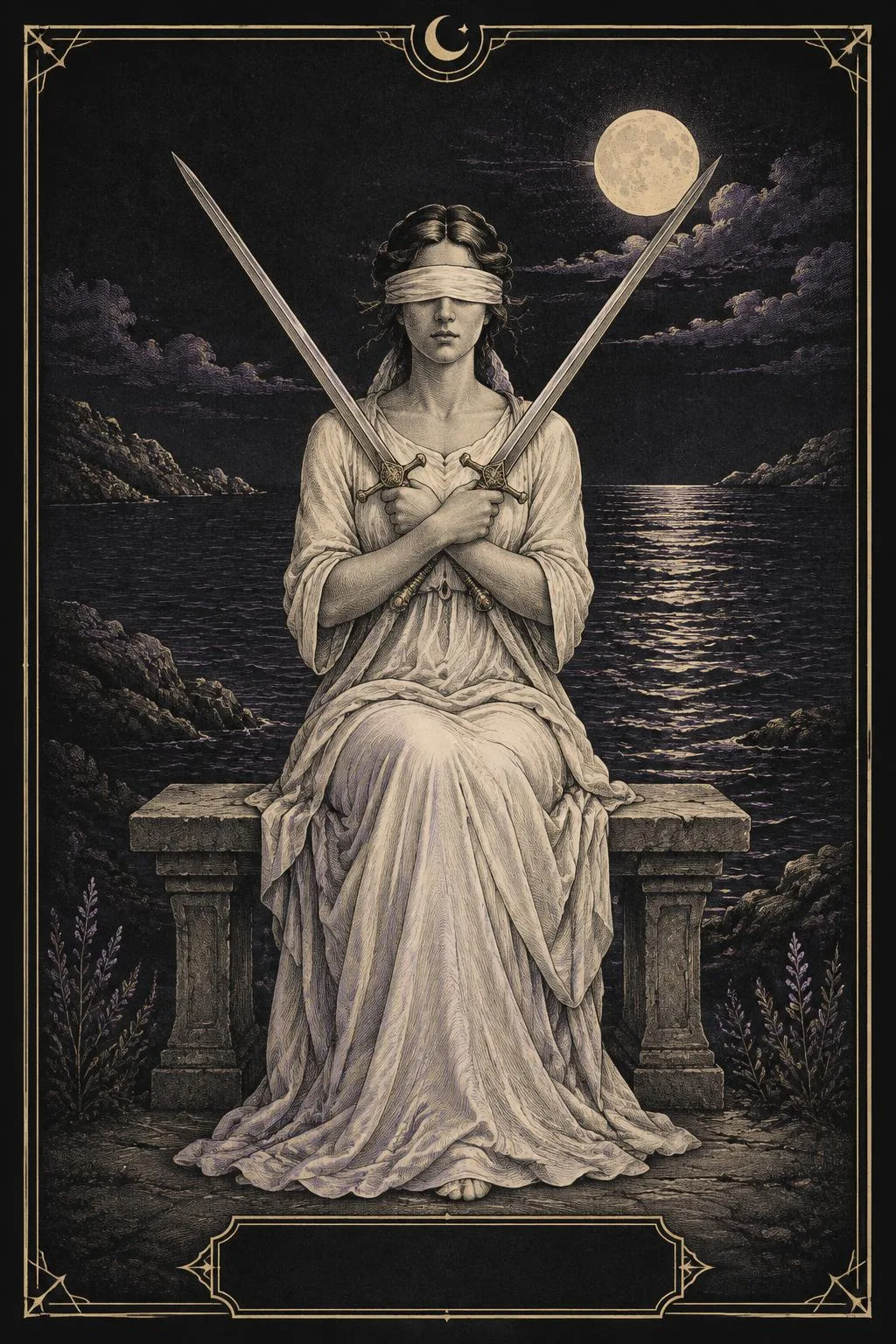
A blindfolded woman sits on a stone bench with two swords crossed over her chest, the sea and a crescent moon behind her. She looks composed, yet she has shut out both sight and feeling to stay that way. In a reading this card usually describes a decision you keep postponing, often because both options cost something. The stillness is a truce, not a resolution, and it tends to hold only as long as nothing new is allowed in.
Apverstos kortos reikšmė
The blindfold slips. New information, mounting pressure, or sheer fatigue pushes a stalled decision toward resolution.
Reversed, the balance the Two of Swords was maintaining starts to give way. Sometimes that means relief: you finally see the thing you were avoiding and the choice becomes obvious. Sometimes it means the pressure of too many inputs, with every voice pulling a different way. Either way, the card suggests the truce is ending. The question is whether you make the decision deliberately or let circumstances make it for you.
Raktažodžiai
Tiesios kortos reikšmė: stalemate, difficult choice, avoidance, uneasy balance, blocked feelings
Apverstos kortos reikšmė: decision made, information revealed, overwhelm, pressure to choose, clarity returning
Klausimas apmąstymams
What are you choosing not to see, and what would it cost to look?
Meilėje
You may be keeping the peace by not looking too closely at what you feel. A relationship question is waiting for an honest answer from you.
Apversta: Something hidden comes to light, or the pressure of indecision finally breaks. Clarity may be uncomfortable, but it moves things.
Meilės išdėstymai ir santykių išdėstymo schemosKarjeroje
Two paths, and no movement on either. Consider what information you would need to choose, then go and get it.
Apversta: A long-deferred work decision is coming to a head, sometimes because someone else forces the timing. Prepare rather than react.
Finansų srityje
You are weighing two financial options and defaulting to neither. Delay is itself a choice with a cost.
Apversta: A money decision you avoided now needs attention, or new figures change the picture. Look at the real numbers rather than the feared ones.
Aiškinimas „taip / ne“
Not yet: the card describes a decision deliberately left open, and reversed it leans toward an answer that still needs weighing.
Kaip veikia „taip ar ne“ išdėstymaiŠI KORTA IŠDĖSTYME
Kortos reikšmė keičiasi pagal poziciją, kurioje ji atsiduria, ir pagal jūsų klausimą. Šiuose straipsniuose paaiškinta, kaip veikia kiekviena schema; jūsų išdėstymo kortos ištraukiamos atsitiktinai.
- Taip / Ne išdėstymai
Tiesi korta Kardų dvejetas linksta į atsakymą „galbūt“, apversta – „galbūt“. „Taip / Ne“ išdėstymas dar parodo, kas palaiko atsakymą, kas jį apsunkina ir kas priklauso nuo jūsų.
- Meilė ir santykiai
Penkios pozicijos: Jūs, Kitas žmogus, Ryšys, Iššūkis, Galimybės. Nuo to, kurioje pozicijoje atsiduria korta Kardų dvejetas, priklauso, ką ji pasakys apie jūsų ryšį.
- Praeitis / Dabartis / Ateitis
Trys pozicijos: Praeitis, Dabartis, Ateitis. Praeities pozicijoje korta Kardų dvejetas apibūdina tai, kas suformavo situaciją, ateities pozicijoje – kur situacija gali krypti.
NUO REIKŠMĖS PRIE PRAKTIKOS
- Dienos korta
Viena korta per dieną ir klausimas apmąstymui: neskubus būdas pažinti kaladę, taip pat ir šią kortą.
- Pasirinkite vedlį
Vedlys keičia tai, kaip parašytas aiškinimas, bet ne tai, kokios kortos iškrenta. Kiekvienas jų yra savito stiliaus DI balsas.
SUSIJUSIOS KORTOS
SĄSAJOS
- Numerologija: gyvenimo kelio skaičius 2
Korta neša skaičių 2. Numerologijoje tas pats skaičius įvardija gyvenimo kelią; skaitykite jį ten pagal jo paties taisykles – kaip kortos palydovą, o ne jos dalį.