Pradėti galima nemokamai, paskyros nereikia.
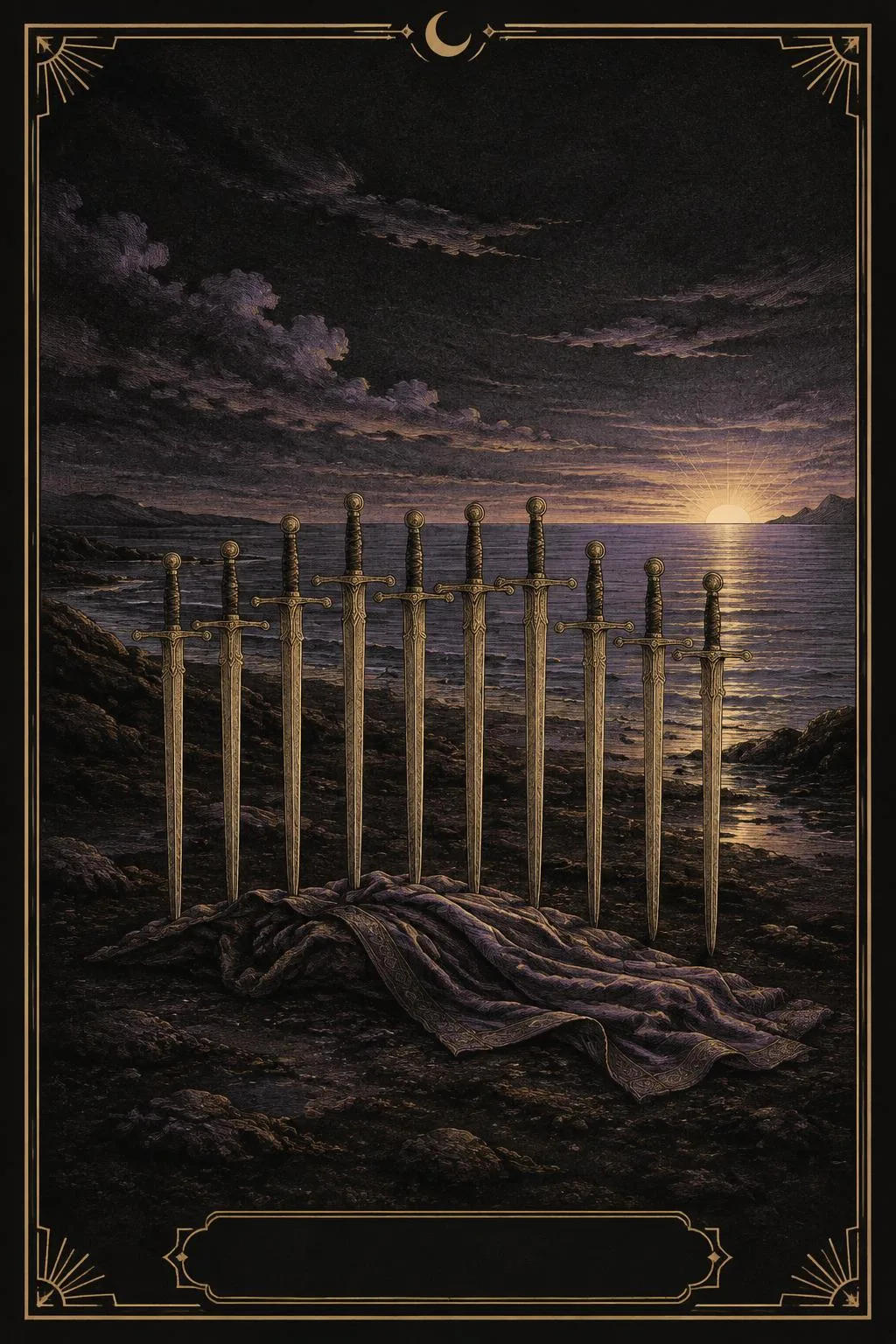
MAŽOJI ARKANA · KALAVIJAI / IŠSAMIAU
Kardų dešimtukas
An ending that cannot be argued with, and the strange relief of having nothing left to defend.
Taro siūlo požiūrį, o ne nekintamą prognozę. Pagalvokite, kur šis vaizdas susitinka su jūsų pačių patirtimi.
Tiesios kortos reikšmė
It is over, completely. Something has ended in a way that leaves no room for pretending otherwise, and the dawn is already on the horizon.
A figure lies face down with ten swords in their back, under a black sky that is just beginning to lighten at the edge. The stillness of the scene is total. In a reading this marks a definitive ending: a relationship, a role, a belief about someone, or a long period of struggle that has finally run out. It can feel like betrayal or collapse. The dawn behind the hills is the card's other half: when there is nothing left to lose, the worst is already behind you.
Apverstos kortos reikšmė
You begin to get up. Recovery starts, slowly, or you discover you have been lying there longer than the wound required.
Reversed, the swords are being pulled out and the figure stirs. In its clearest form this is survival and the first stage of healing: the ending has been accepted and life, cautiously, resumes. In its shadow form it shows a refusal to let the ending be final, replaying a betrayal, or staying in the role of the wounded party longer than serves you. The card asks whether you are rising from the ground or holding on to it.
Raktažodžiai
Tiesios kortos reikšmė: painful ending, rock bottom, betrayal, finality, exhaustion
Apverstos kortos reikšmė: recovery, survival, refusing to end it, slow healing, dramatising the loss
Klausimas apmąstymams
What has truly ended, and what becomes possible once you stop defending it?
Meilėje
A relationship reaches a definitive end, or an illusion about it does. The pain is honest, and so is the clearing it leaves.
Apversta: You are healing from a hard ending, or keeping it alive by revisiting it. Let the story close so a new one can begin.
Meilės išdėstymai ir santykių išdėstymo schemosKarjeroje
A project, job, or professional relationship ends decisively. It may feel like failure; it is more often the end of something that had already stopped working.
Apversta: Recovery after a professional blow, or difficulty accepting that a chapter is closed. Rebuilding starts with admitting it.
Finansų srityje
A financial situation reaches its lowest point. Painful as it is, the floor is where rebuilding becomes possible.
Apversta: You are slowly regaining footing after a loss, or still treating a past setback as the whole story.
Aiškinimas „taip / ne“
No: the matter is ending or already ended, though reversed the recovery that follows allows a cautious maybe.
Kaip veikia „taip ar ne“ išdėstymaiŠI KORTA IŠDĖSTYME
Kortos reikšmė keičiasi pagal poziciją, kurioje ji atsiduria, ir pagal jūsų klausimą. Šiuose straipsniuose paaiškinta, kaip veikia kiekviena schema; jūsų išdėstymo kortos ištraukiamos atsitiktinai.
- Taip / Ne išdėstymai
Tiesi korta Kardų dešimtukas linksta į atsakymą „ne“, apversta – „galbūt“. „Taip / Ne“ išdėstymas dar parodo, kas palaiko atsakymą, kas jį apsunkina ir kas priklauso nuo jūsų.
- Meilė ir santykiai
Penkios pozicijos: Jūs, Kitas žmogus, Ryšys, Iššūkis, Galimybės. Nuo to, kurioje pozicijoje atsiduria korta Kardų dešimtukas, priklauso, ką ji pasakys apie jūsų ryšį.
- Praeitis / Dabartis / Ateitis
Trys pozicijos: Praeitis, Dabartis, Ateitis. Praeities pozicijoje korta Kardų dešimtukas apibūdina tai, kas suformavo situaciją, ateities pozicijoje – kur situacija gali krypti.
NUO REIKŠMĖS PRIE PRAKTIKOS
- Dienos korta
Viena korta per dieną ir klausimas apmąstymui: neskubus būdas pažinti kaladę, taip pat ir šią kortą.
- Pasirinkite vedlį
Vedlys keičia tai, kaip parašytas aiškinimas, bet ne tai, kokios kortos iškrenta. Kiekvienas jų yra savito stiliaus DI balsas.