Pradėti galima nemokamai, paskyros nereikia.
MAŽOJI ARKANA · LAZDOS / IŠSAMIAU
Lazdų penketas
Friction and competition where energies clash; a struggle that can sharpen you if it does not scatter you.
Taro siūlo požiūrį, o ne nekintamą prognozę. Pagalvokite, kur šis vaizdas susitinka su jūsų pačių patirtimi.
Tiesios kortos reikšmė
Competing voices, rivalry, and disagreement. The clash is uncomfortable but it can also be the sound of something being worked out.
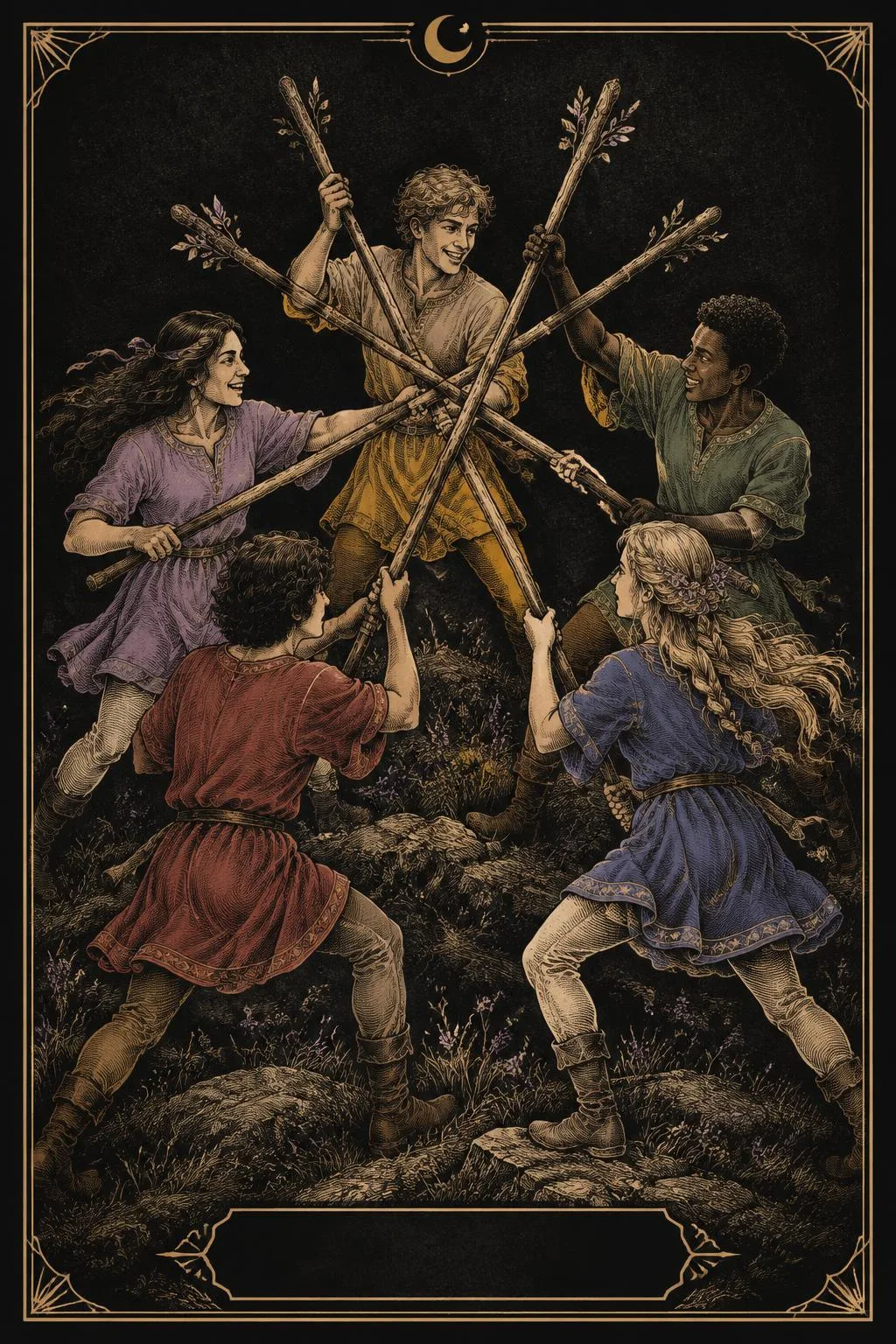
Five young figures swing wands at one another in a disorganised scuffle, and no one seems to be winning or really hurt. This is the suit's first obstacle: too many wills in one space, each sure of its own direction. In a reading it often describes competition, brainstorming that turns into argument, or the friction of a group that has not yet found its rhythm. Treat it as sparring rather than war, and look for the rule that would let the game be played well.
Apverstos kortos reikšmė
The scuffle moves inside, or ends. Conflict avoided at a cost, or tension finally released after everyone has said their piece.
Reversed, the wands are lowered. Sometimes this means a dispute has genuinely resolved and people are ready to cooperate. Just as often it means you are swallowing disagreement to keep the peace, or the battle has moved into your own head where you argue with yourself. It can also show up as competition you have quietly dropped out of. Notice whether the quiet is real relief or the silence of something unspoken.
Raktažodžiai
Tiesios kortos reikšmė: conflict, competition, rivalry, clashing ideas, struggle, tension
Apverstos kortos reikšmė: avoiding conflict, inner conflict, resolution, tension released, suppressed anger
Klausimas apmąstymams
What are you fighting for in this situation, and is the struggle moving anything forward?
Meilėje
Bickering, competing needs, or rivals for attention. Disagreement does not mean incompatibility, but it does need fair rules.
Apversta: Conflict avoided rather than resolved, or an old argument that has finally burned out. Check what is still unspoken.
Meilės išdėstymai ir santykių išdėstymo schemosKarjeroje
A competitive environment, clashing ideas in a team, or many people wanting to lead. Make your case clearly and let the best idea win.
Apversta: Workplace tension that goes underground, or a rivalry that has cooled. Watch for passive resistance and unspoken frustration.
Finansų srityje
Competing financial priorities or disagreements over spending. Negotiate rather than let the loudest voice decide.
Apversta: Avoiding a money conversation that needs to happen, or an argument over resources that has finally settled. Be honest about what was agreed.
Aiškinimas „taip / ne“
More no than yes while energies are at odds; reversed, the answer softens as the conflict settles or shifts.
Kaip veikia „taip ar ne“ išdėstymaiŠI KORTA IŠDĖSTYME
Kortos reikšmė keičiasi pagal poziciją, kurioje ji atsiduria, ir pagal jūsų klausimą. Šiuose straipsniuose paaiškinta, kaip veikia kiekviena schema; jūsų išdėstymo kortos ištraukiamos atsitiktinai.
- Taip / Ne išdėstymai
Tiesi korta Lazdų penketas linksta į atsakymą „ne“, apversta – „galbūt“. „Taip / Ne“ išdėstymas dar parodo, kas palaiko atsakymą, kas jį apsunkina ir kas priklauso nuo jūsų.
- Meilė ir santykiai
Penkios pozicijos: Jūs, Kitas žmogus, Ryšys, Iššūkis, Galimybės. Nuo to, kurioje pozicijoje atsiduria korta Lazdų penketas, priklauso, ką ji pasakys apie jūsų ryšį.
- Praeitis / Dabartis / Ateitis
Trys pozicijos: Praeitis, Dabartis, Ateitis. Praeities pozicijoje korta Lazdų penketas apibūdina tai, kas suformavo situaciją, ateities pozicijoje – kur situacija gali krypti.
NUO REIKŠMĖS PRIE PRAKTIKOS
- Dienos korta
Viena korta per dieną ir klausimas apmąstymui: neskubus būdas pažinti kaladę, taip pat ir šią kortą.
- Pasirinkite vedlį
Vedlys keičia tai, kaip parašytas aiškinimas, bet ne tai, kokios kortos iškrenta. Kiekvienas jų yra savito stiliaus DI balsas.
SUSIJUSIOS KORTOS
SĄSAJOS
- Numerologija: gyvenimo kelio skaičius 5
Korta neša skaičių 5. Numerologijoje tas pats skaičius įvardija gyvenimo kelią; skaitykite jį ten pagal jo paties taisykles – kaip kortos palydovą, o ne jos dalį.