Pradėti galima nemokamai, paskyros nereikia.
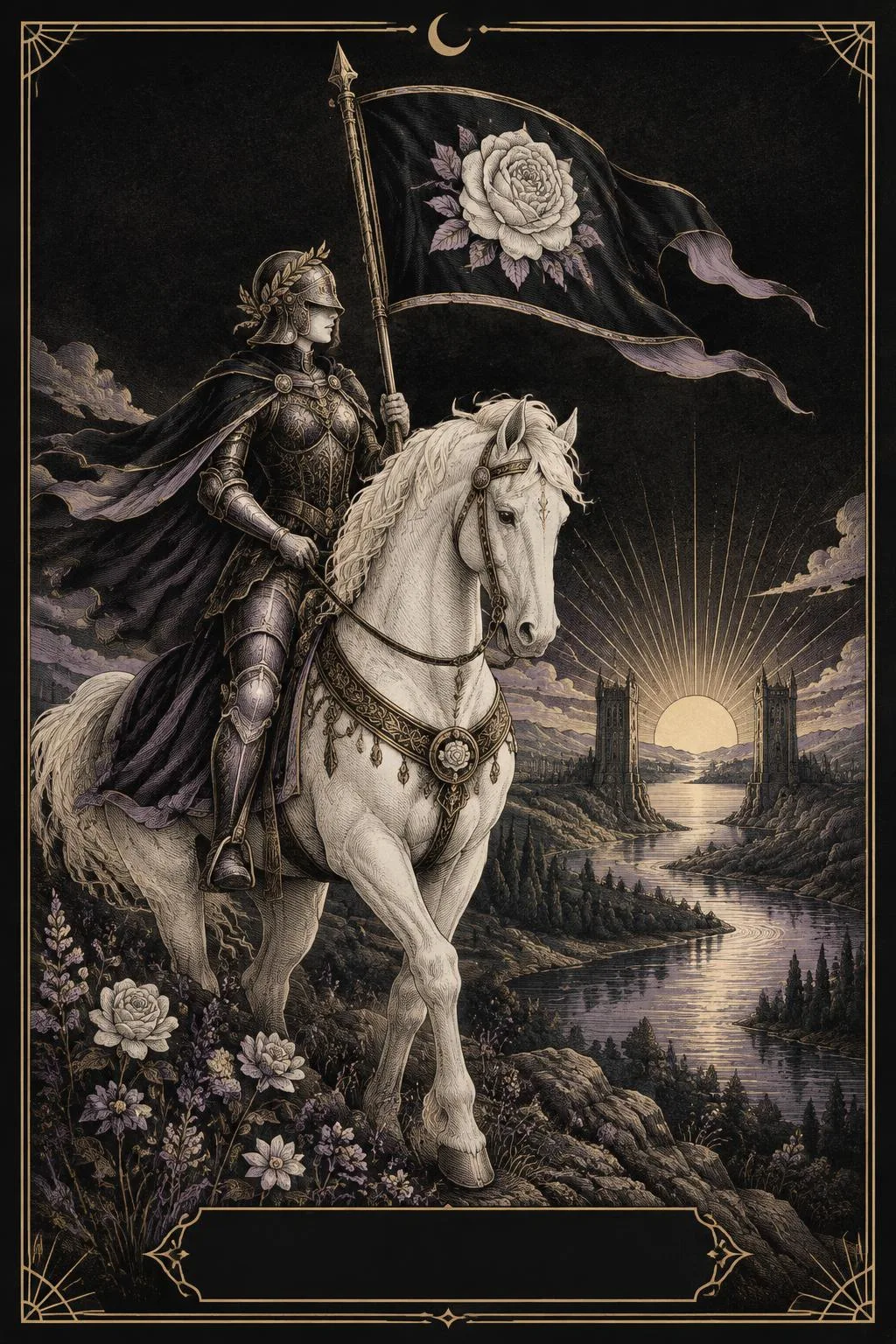
DIDŽIOJI ARKANA / IŠSAMIAU
Mirtis
An ending that clears the ground, and the transformation that could not happen without it.
Taro siūlo požiūrį, o ne nekintamą prognozę. Pagalvokite, kur šis vaizdas susitinka su jūsų pačių patirtimi.
Tiesios kortos reikšmė
Endings, release, and the deep change that follows letting something go.
A skeleton in black armour rides a white horse, carrying a black banner with a white rose, while a king lies fallen, a bishop pleads, and a child offers flowers; in the distance the sun rises between two towers. Death in Tarot is almost never literal: it describes an ending that is complete and a transformation that follows from it. In a reading this card tends to mark the close of a chapter, a role or identity you are outgrowing, or a clearing away that feels harsh now and necessary later.
Apverstos kortos reikšmė
A change is being resisted, and what should have ended is lingering.
Reversed, the horse stands still and the fallen refuse to fall. This can show up as holding on to a situation, relationship, or self-image long after it has stopped living, fear of the unknown keeping you in the known even when it hurts, or a transition that is dragging because no one will name it. In a reading it often asks what you are keeping alive out of habit, and what it would cost you to let it finally rest.
Raktažodžiai
Tiesios kortos reikšmė: endings, transformation, transition, release, renewal, change
Apverstos kortos reikšmė: resistance to change, stagnation, clinging, fear of endings, slow release
Klausimas apmąstymams
What have you been keeping alive that has already, quietly, come to its end?
Meilėje
A relationship or a phase of one is ending or transforming. What follows may be deeper, but first something must be released.
Apversta: Holding on to a connection past its natural end, or avoiding a conversation that would change everything. Clinging rarely preserves anything worth keeping.
Meilės išdėstymai ir santykių išdėstymo schemosKarjeroje
A role, job or identity is ending to make room for the next. The transition may be unwelcome but it is also freeing.
Apversta: Staying in work that has run its course because leaving feels too risky. Stagnation has its own cost.
Finansų srityje
An old approach to money is ending. Let go of what no longer serves, and expect a period of adjustment.
Apversta: Refusing to cut a loss or close a chapter financially. Fear of change is keeping you attached to what drains you.
Aiškinimas „taip / ne“
A no to things staying as they are, and a yes to the change beneath the question.
Kaip veikia „taip ar ne“ išdėstymaiŠI KORTA IŠDĖSTYME
Kortos reikšmė keičiasi pagal poziciją, kurioje ji atsiduria, ir pagal jūsų klausimą. Šiuose straipsniuose paaiškinta, kaip veikia kiekviena schema; jūsų išdėstymo kortos ištraukiamos atsitiktinai.
- Taip / Ne išdėstymai
Tiesi korta Mirtis linksta į atsakymą „ne“, apversta – „galbūt“. „Taip / Ne“ išdėstymas dar parodo, kas palaiko atsakymą, kas jį apsunkina ir kas priklauso nuo jūsų.
- Meilė ir santykiai
Penkios pozicijos: Jūs, Kitas žmogus, Ryšys, Iššūkis, Galimybės. Nuo to, kurioje pozicijoje atsiduria korta Mirtis, priklauso, ką ji pasakys apie jūsų ryšį.
- Praeitis / Dabartis / Ateitis
Trys pozicijos: Praeitis, Dabartis, Ateitis. Praeities pozicijoje korta Mirtis apibūdina tai, kas suformavo situaciją, ateities pozicijoje – kur situacija gali krypti.
NUO REIKŠMĖS PRIE PRAKTIKOS
- Dienos korta
Viena korta per dieną ir klausimas apmąstymui: neskubus būdas pažinti kaladę, taip pat ir šią kortą.
- Pasirinkite vedlį
Vedlys keičia tai, kaip parašytas aiškinimas, bet ne tai, kokios kortos iškrenta. Kiekvienas jų yra savito stiliaus DI balsas.
SUSIJUSIOS KORTOS
SĄSAJOS
- Zodiakas: Skorpionas
Auksinės aušros tradicijoje ši korta siejama su ženklu Skorpionas; ženklo profilis gerai skaitomas šalia kortos.